

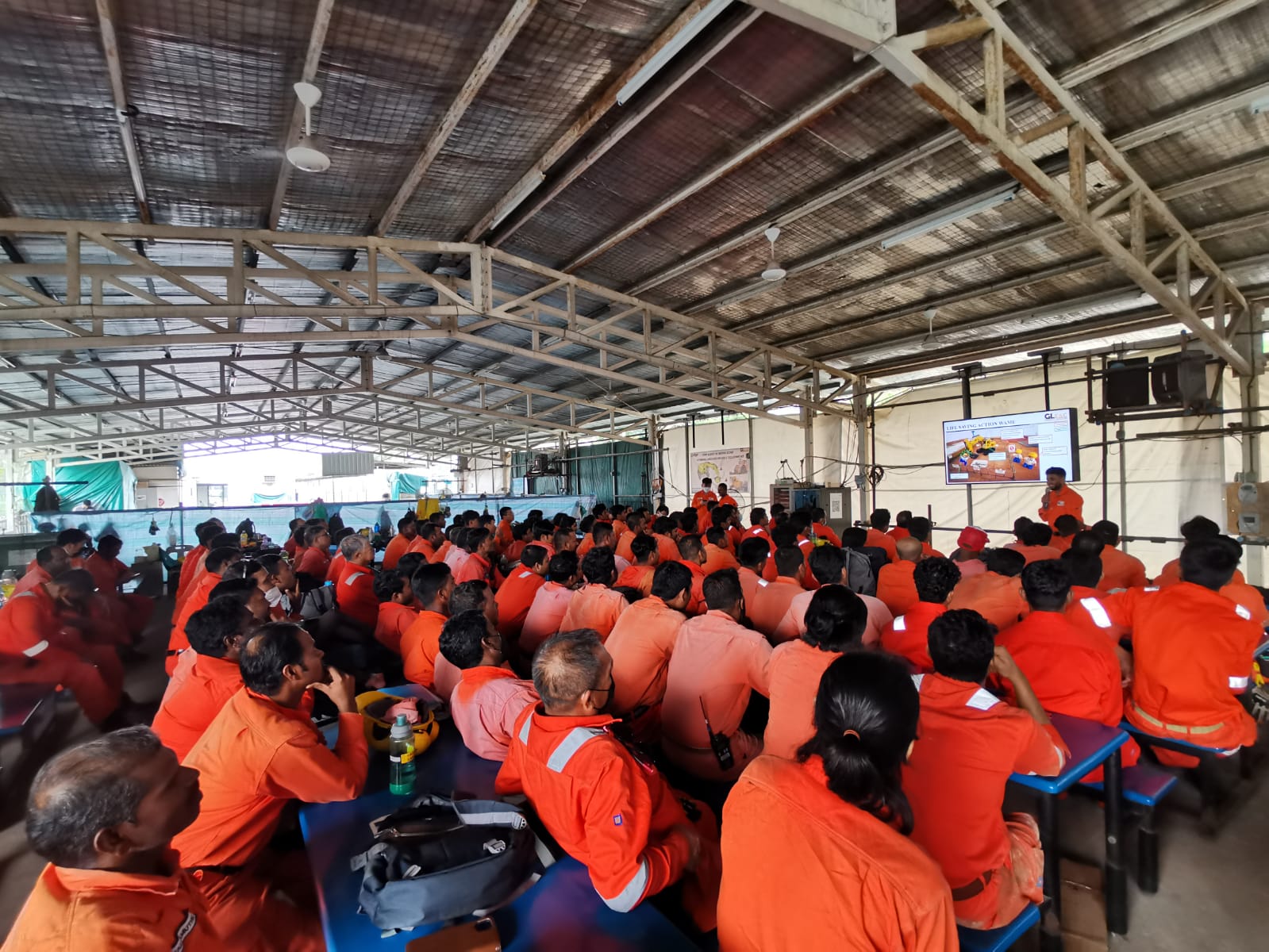
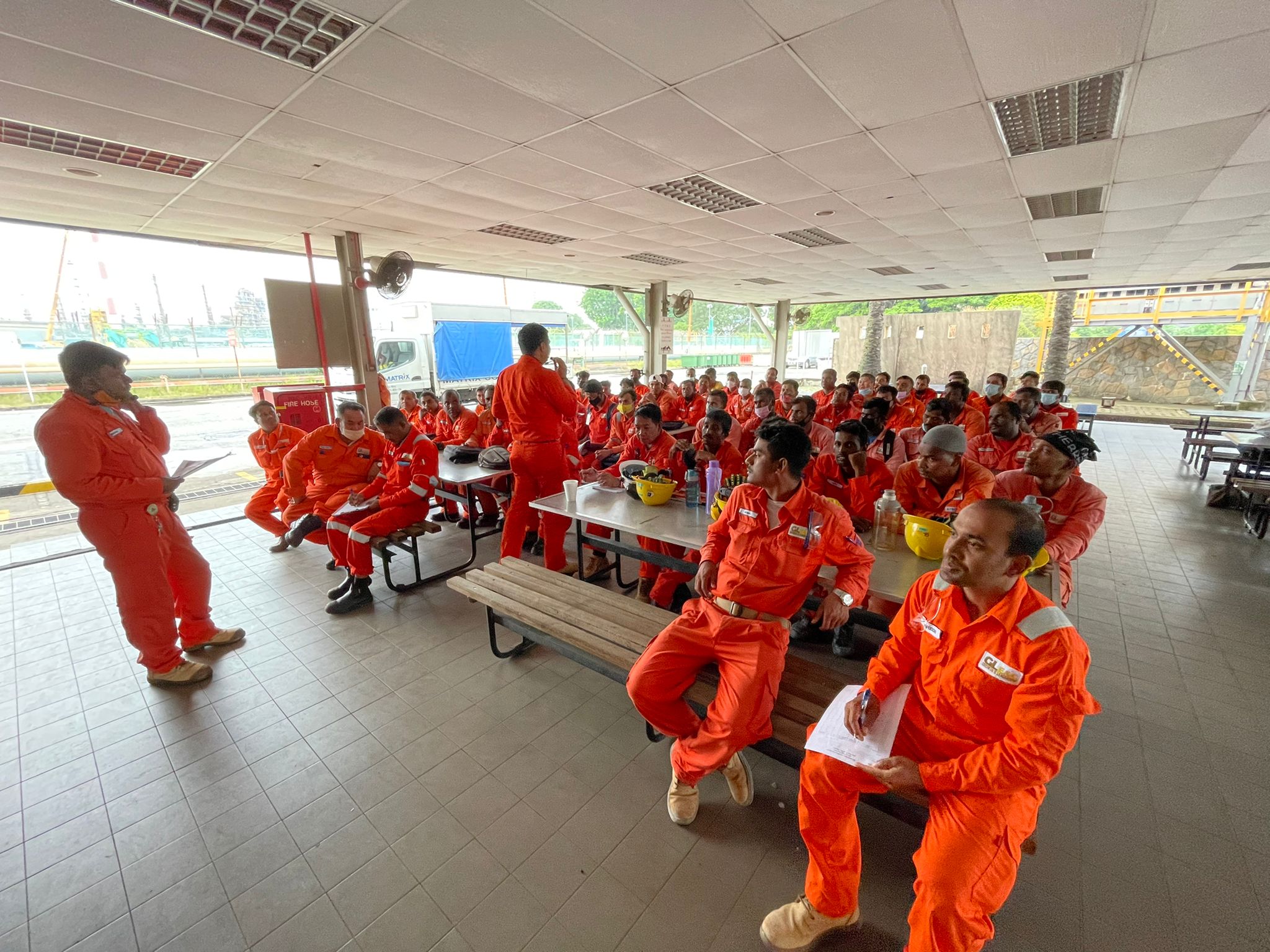
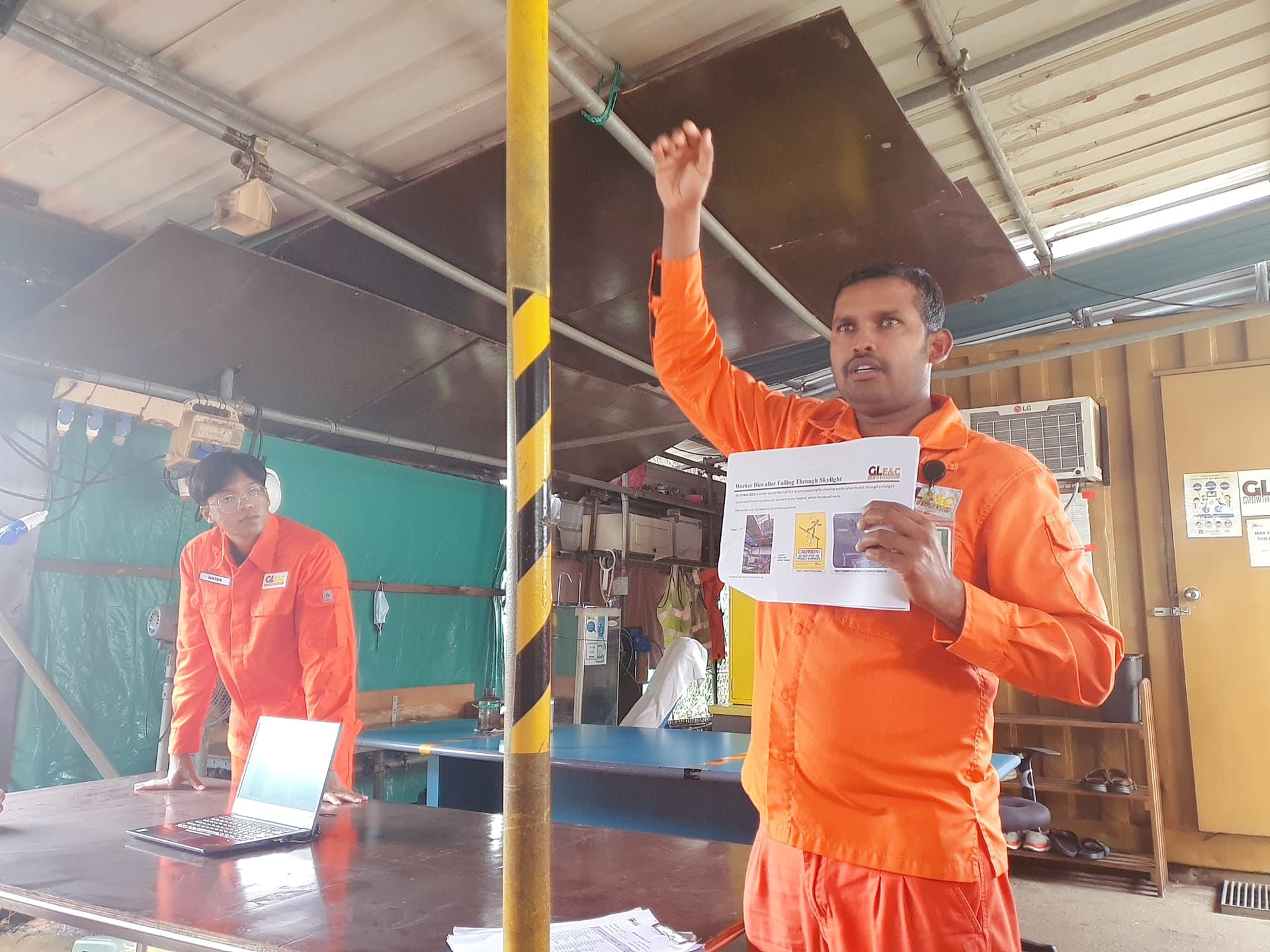
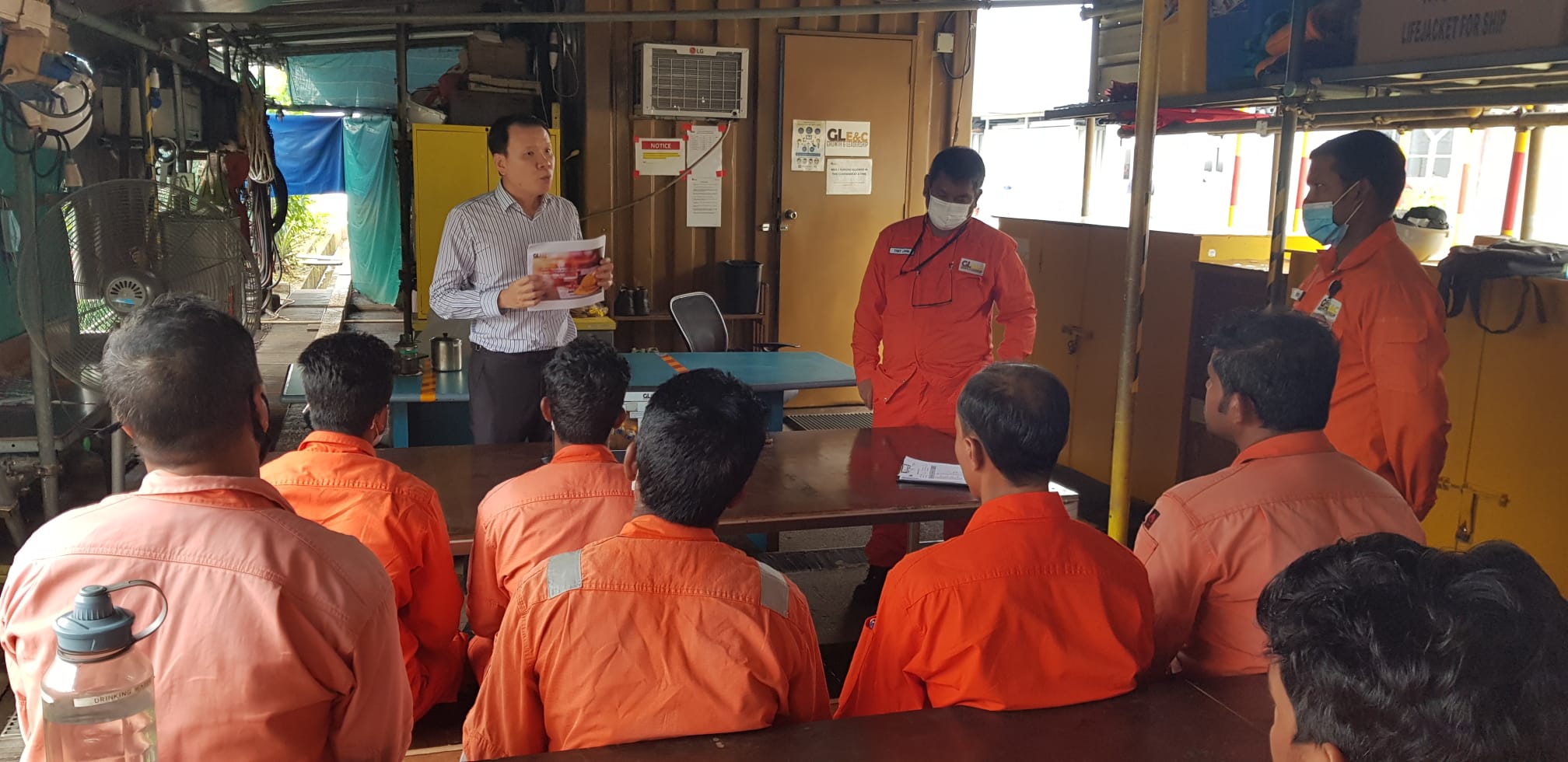
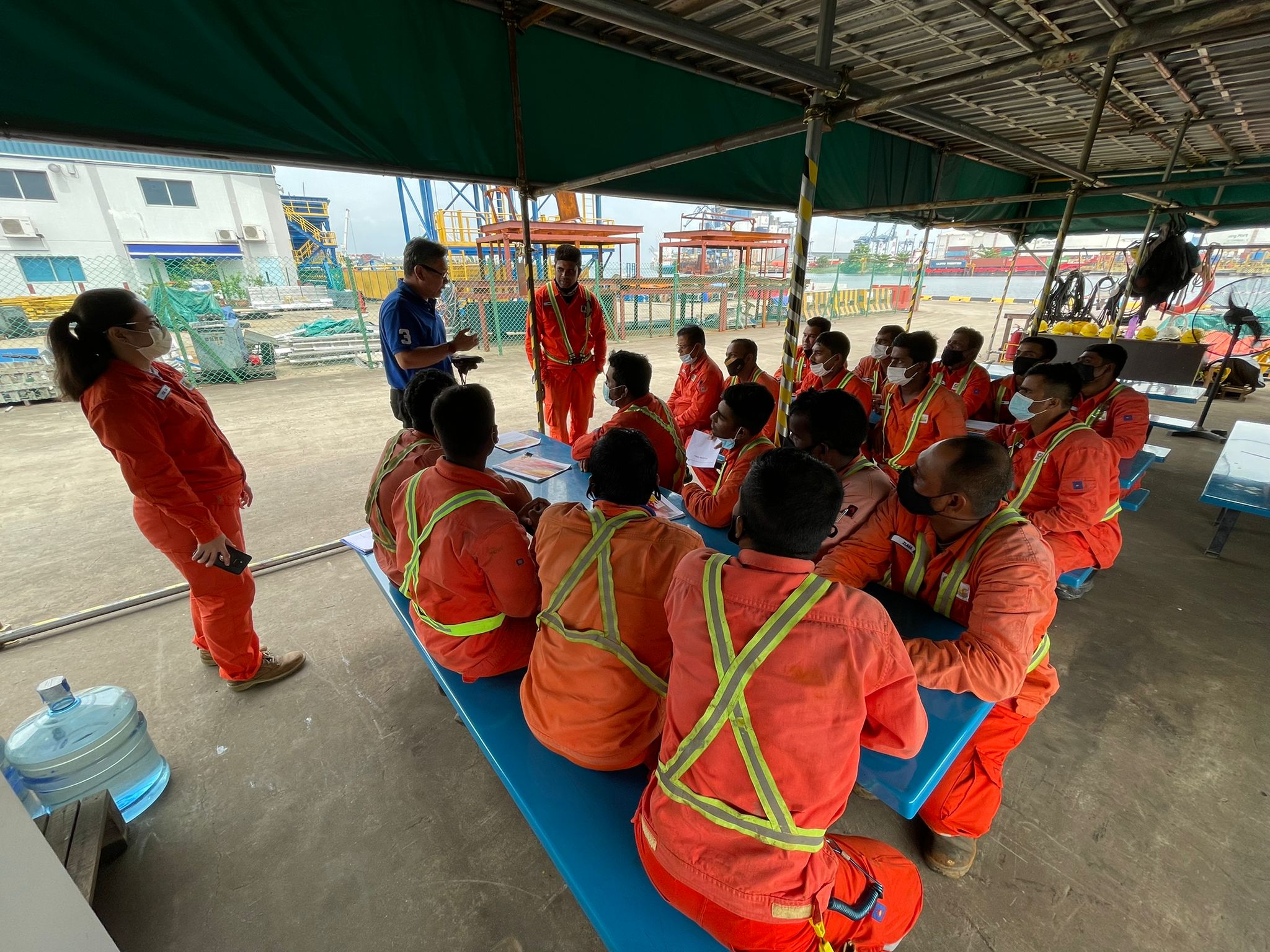
In Singapore, almost all the fatal cases could have been prevented if workers were more aware of risky situation, and companies ensured that workers followed safe working procedure. Close to half of the fatal accidents in the past months were vehicular-related (Working Around Mobile Equipment – WAME). Workers were killed due to reasons like being in vehicles’ blind spots, crushed between the moving parts of vehicles, run over by vehicles whose handbrakes were not engaged, or whose engines were left running when there was no driver/operator. GL E&C have evaluated the work activities and took further steps to enhance the workers awareness on WAME hazards and mitigation, especially for new workers deployed in the project. Using a 3D model and explain blind spots of various construction equipment commonly used in the worksite. The hands-on practical session also included discussions to reinforce expectations under the Life Saving Action (LSA) Start Work Checks (SWC) e.g. setting up exclusion zones to separate workers and mobile equipment; and “triggers” when approaching each equipment minimum safe zone (HALO) and blind spots. With these practical sessions, the workers will have a better understand of WAME LSA expectations. Key Learning: 1. Making it easier to get it right through practical hands-on demonstrations, especially for new workers to better understand WAME hazards and mitigations. 2. Be familiar and anticipate what can goes wrong when working around mobile equipment.




There have been 36 fatal workplace accidents in 2022 so far, close to the 37 recorded for the whole of 2021 in Singapore. Almost all the fatal cases could have been prevented if workers were more aware of risky situations, and companies ensured that workers followed safe working procedures.
Close to half of the fatal accidents in the past three months were vehicular-related (Working Around Mobile Equipment – WAME). Workers were killed due to reasons like being in vehicles’ blind spots, crushed between the moving parts of vehicles, run over by vehicles whose handbrakes were not engaged, or whose engines were left running when there was no driver/operator.
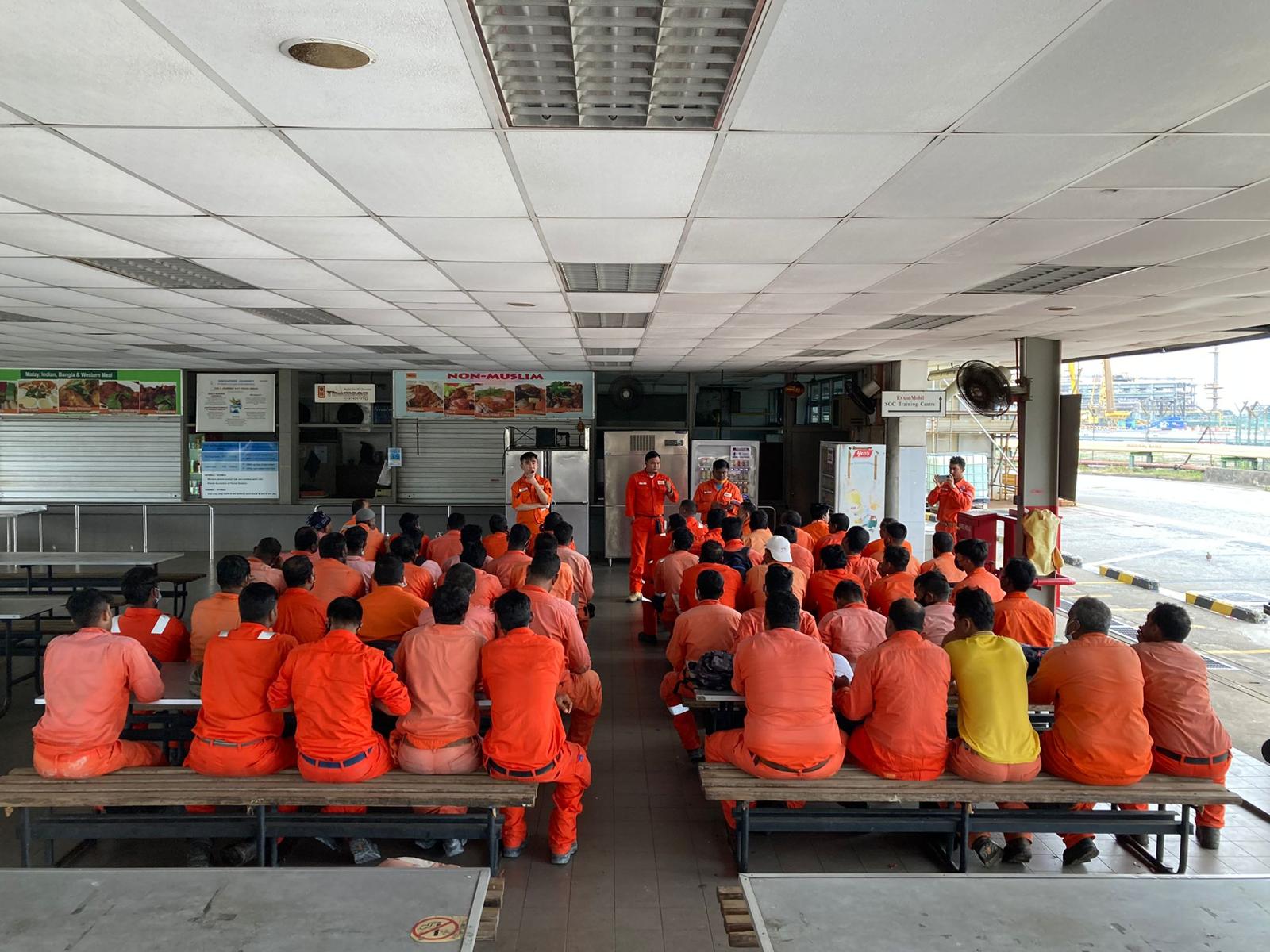
To stop this worrying trend, MOM is requiring companies to conduct a mandatory Safety Time Out and allocate time to review on the safety procedure.
Management commitment to safety is a specific and critical component of safety culture in the company. With the lead and commitment of GL E&C Management, we strive to continue to promote safety as a value and upkeep the safety performance within the work crew.